Pest Control
Pirongia - Bait Stations
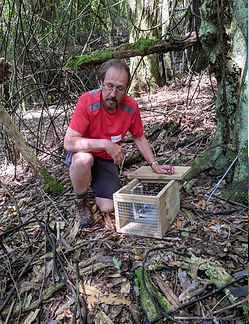
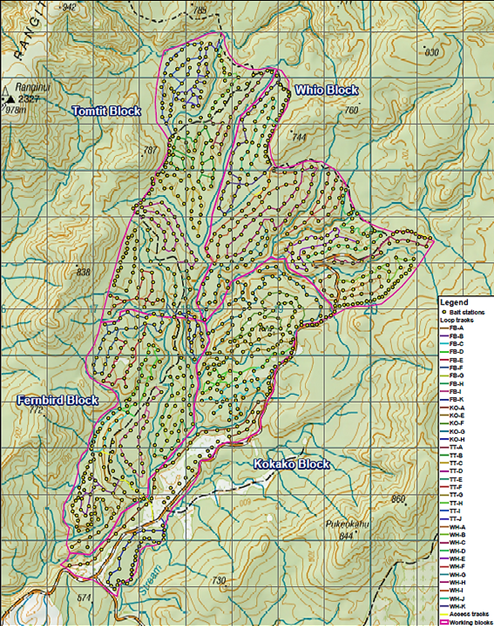
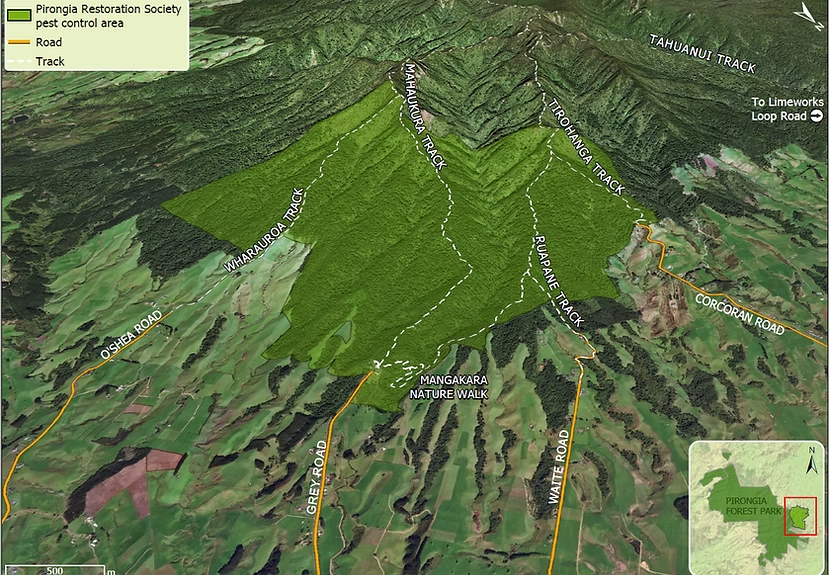
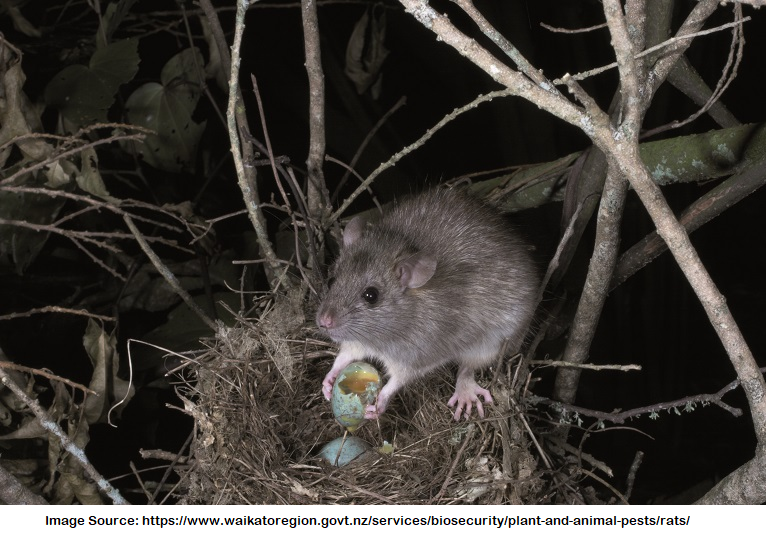
1350 Hectares of Pirongia Forest is currently under manual pest control operations using Bait stations. These bait stations use toxic bait such as Diphacinone and Pindone. Twice a year (spring and summer), volunteers service these devices to remove old bait or top up empty bait stations.
Okahukura - Bait stations
The Okahukura Block is located in North Pureora Forest. 1000 Hectares , is under pest control management using the same bait stations as Pirongia. This ongoing operation was initiated to support the forest area that provides Kookako for translocation to Pirongia.
Mustelid Trapping
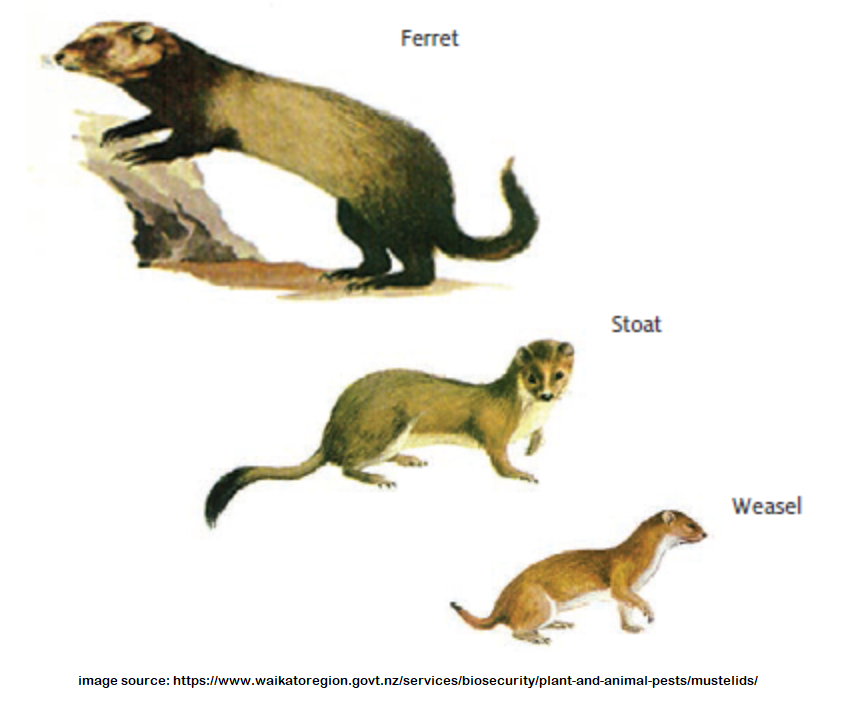
In addition to bait stations, DOC series traps (DOC200 & DOC250 Traps) are also used to support pest control operations. Unlike the bait stations, mustelid traps allow for catch numbers to be collected as the animal is contained in the trap.
AT220 Automated Traps
In 2024, 50 new AT220 traps were purchased then later installed in strategic locations within the Pirongia management area. Invented by the NZ company NZ Auto Traps, these new traps have proven to be very effective in the control of possums and signal NZ’s commitment to innovation in the biodiversity space. The society is very excited about the potential benefits to our pest control operations.
PLANT PESTS
Plant Pests are found throughout the forest especially on the fringes.
Climbing vines such as Japanese honeysuckle grow quickly, smothering tall trees. Other weeds such as tradescantia form dense mats cutting out all light and stopping the growth of native seedlings.
Some introduced trees, like pines and privet, grow vigorously and can change the forest makeup. Gorse, pampas and buddleia quickly invade eroded areas and slips, preventing native species from re-establishing.