Monitoring Species on Mt Pirongia
MONITORING AND CONTROL
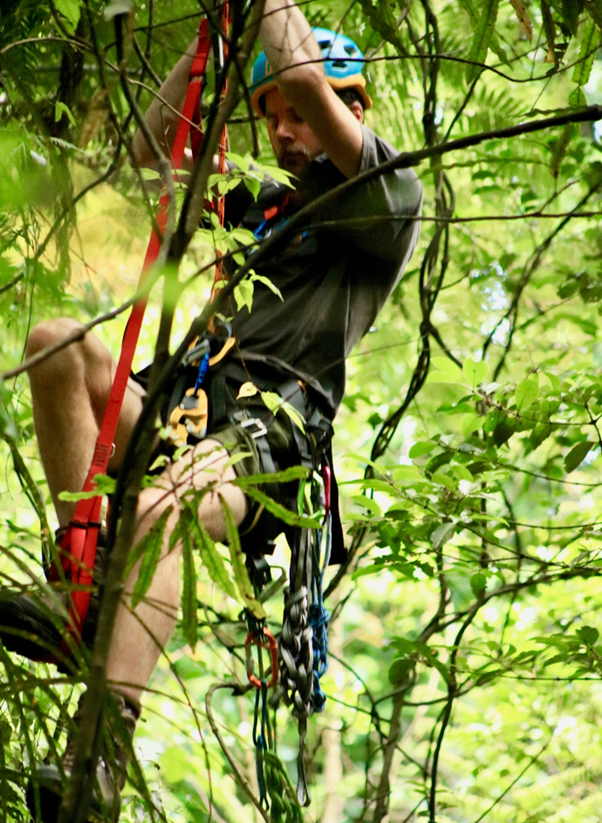
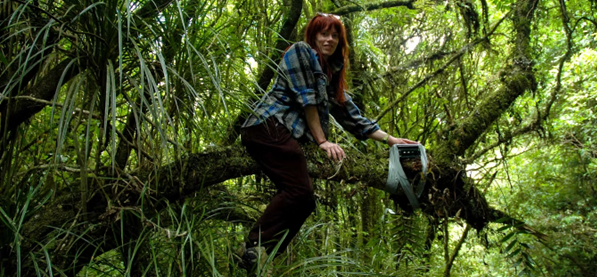
Plant and animal pests are routinely monitored by independent ecology specialists, to assess population levels. As endangered species are discovered outside the protected areas, or pest populations increase, monitoring data is used to determine when and where additional control measures are needed.
Forest ecosystems can be surveyed to understand the impacts pests are having, while bird populations may be monitored through methods such as banding individual birds, recording nest activity on video, or listening for native bird calls.
Even insect numbers can be evaluated using pitfall traps, which safely capture insects for counting before they are released.
A range of techniques is used to control pests. Animal pests may be managed through methods such as poisoning, shooting, trapping, and fencing. Plant pests can be removed manually—by digging, cutting, or felling—or treated with herbicides for chemical control.
New Zealand is a global leader in developing effective monitoring tools and control strategies, helping ensure the protection and long-term health of our native ecosystems for generations to come.
Bat Monitoring
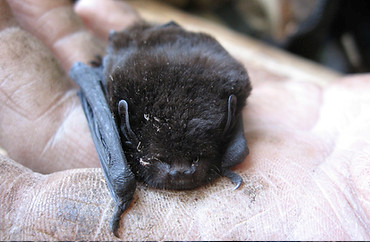
Andrea Dekroot's PhD work in 2005 triggered our awareness that the threatened long-tailed bats (Chalinolobus tuberculata) were still present on Mt Pirongia. Since then, we have undertaken training for volunteers and carried out monitoring of native bats on Mt Pirongia. As technology has developed, we have procured monitoring equipment and worked with specialist ecologists to develop an understanding of Mt Pirongia's native bat population.
Piitoitoi
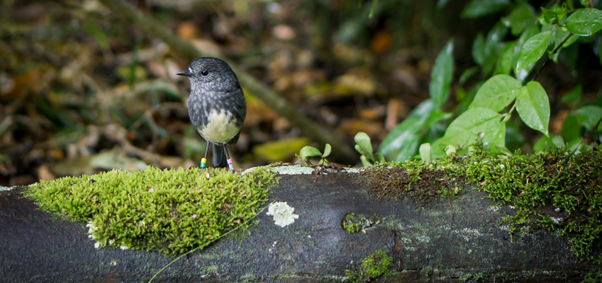
Pītoitoi (North Island robins) are now breeding successfully on Mt Pirongia following their translocation in 2012-13. 65 birds were captured from Mangatutu ecological area in Northern Pureora. Funding for the project was provided by Waikato Regional Council and 70 volunteers were involved. Bird monitoring is carried out annually to assess the health of the population. We are now sighting unbanded birds indicating this species’ successful breeding.
Kookako Monitoring
The last kokako were captured on Mt Pirongia in the 1990s to stop that lineage dying out. This iconic bird was adopted by the society as a symbol of the mountains plight to retain its natural heritage and our commitment to preserve its beauty as one of the largest forest areas in the Waikato region.
Monitoring Kookako populations is the job of our consulting ecologist, with the support of experienced volunteers. Since the first translocation of Kookako from Pureora Forest in 2017-2018 through to the last one in 2022, annual monitoring and surveys have been performed to measure the effectiveness of our pest control operations.
Interesting facts about kōkako:
They defend their territories using complex singing and they hold the record for the longest known duet of any songbird in the world
They pair for life and breeding pairs will defend a territory of 4 to 25 hectares
They are poor fliers. Kōkako use their strong legs to bound around in the trees but can glide for hundreds of metres!
They favor tall native forest dominated by tawa (Beilschmiedia tawa). Mt Pirongia has extensive groves of large tawa.
Kōkako populations can only persist in native forests with areas that are actively managed to reduce mammalian pests. Rats, possums and mustelids (stoats, weasels and ferrets) can decimate bird populations by eating eggs, overgrazing food supplies and killing chicks. Our community-based pest control dating back to 2006 has allowed us to create a habitat in which kōkako can thrive once again.
Our amazing volunteers make it possible for us to protect kōkako in two native forests: Mt Pirongia and Northern Pureora.